Iran & Middle East Conflict
Page last updated: 22 April 2026
On 28 February 2026, coordinated airstrikes by the United States and Israel targeted Iranian military and leadership, followed by missile and drone attacks by Iran across the Gulf. This marked a significant escalation in the regional conflict.
This page brings together The Swedish Club’s latest updates, guidance and external resources to support Members in understanding developments and assessing their operational and insurance considerations.
Recent Developments and Guidance for Members
The situation in the Persian Gulf and the Strait of Hormuz continues to evolve rapidly. This report summarises the key developments of the past week and provides guidance for Members operating in or with exposure to the region.
Ceasefire and Negotiations
The two-week ceasefire between the United States and Iran, brokered by Pakistan and announced on 8 April, was due to expire on 22 April. Late on 21 April, President Trump announced an indefinite extension, stating that Iran’s government was unable to present a unified negotiating position and needed more time to do so. He confirmed that the US naval blockade of Iranian ports would remain in full force for the duration.
The extension followed several days in which the prospect of a second round of peace talks had effectively collapsed. Iran’s Foreign Ministry stated on 20 April that there was no plan for further negotiations with the United States, and state media reported that Iranian negotiators had informed Washington through Pakistani intermediaries that attending talks was, in their view, pointless while the blockade continued. Vice President Vance’s scheduled trip to Islamabad to lead a second round of negotiations was cancelled on 21 April.
Iran’s UN envoy stated that talks would resume only once the blockade was lifted. A senior adviser to Iran’s chief negotiator described the ceasefire extension as meaningless and characterised the continuing blockade as a siege. Pakistan’s Prime Minister thanked Trump for the extension and indicated that Pakistan would continue its mediation efforts. The UN Secretary-General described the extension as an important step toward de-escalation.
The practical position is that while active US bombing operations remain suspended, neither the blockade nor the closure of the Strait of Hormuz has been resolved, and there is currently no clear pathway to resuming negotiations.
Strait of Hormuz
The Strait of Hormuz has been subject to a volatile and unpredictable sequence of events over the past week. On 17 April, Iran’s Foreign Minister declared the strait fully open to commercial traffic. Oil prices fell sharply in response, dropping more than 10 per cent within hours. However, Trump immediately stated that the US blockade of Iranian ports would continue, and within 24 hours the IRGC reversed course and announced the strait was closed again, citing repeated breaches of trust by the United States.
During the brief window on 17 and 18 April when both sides claimed the strait was open, at least nine commercial vessels transited and six cruise ships exited the Persian Gulf. However, tracking data showed numerous tankers turning back as conditions became unclear. Since the reimposition of IRGC control on 18 April, the strait has remained effectively closed to most commercial traffic.
Iran has been selectively permitting passage for vessels flagged to states it considers friendly. Ships from China, Malaysia, Egypt, South Korea, India, and the Philippines have at various points been allowed through, though this has not been consistent. Iran has also sought to charge tolls exceeding USD 1 million per vessel for secure passage, a practice which several governments, including Greece, have described as unacceptable.
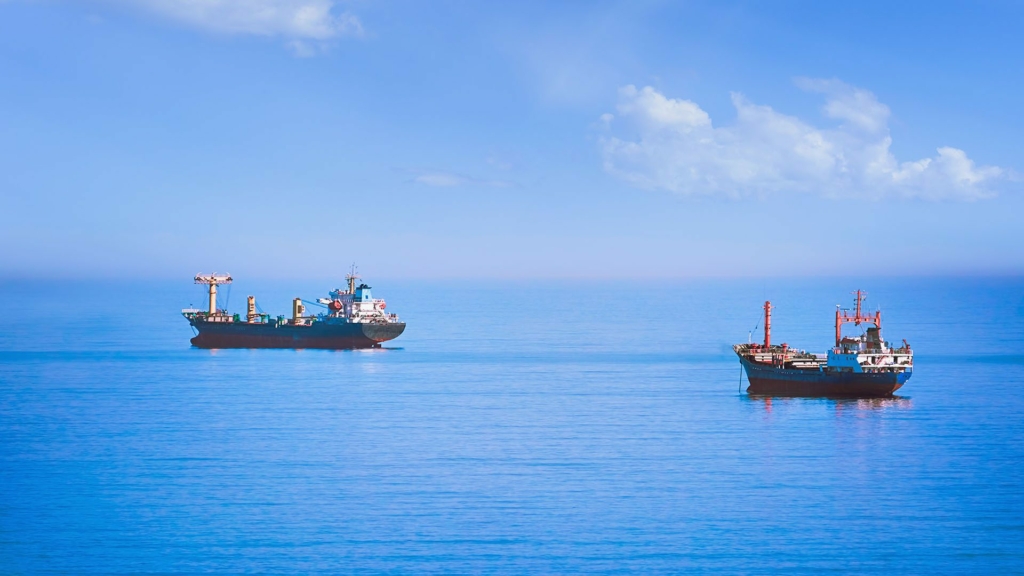
The US maintains a separate naval blockade targeting Iranian ports and Iranian linked cargo. CENTCOM has confirmed that 28 vessels have been turned around or returned to port since the blockade commenced on 13 April, though Lloyd’s List reported that at least 26 ships have successfully bypassed the blockade line in both directions. The US position is that the blockade applies to vessels entering or departing Iranian ports and does not restrict the strait itself for non Iranian traffic. In practice, however, the combination of Iran’s closure and the US blockade means that the strait is not safely navigable for most commercial shipping.
Approximately 13 million barrels per day of crude, condensate, and natural gas liquids remain shut in. An estimated 20,000 seafarers and 2,000 vessels are stranded in the Persian Gulf. Cumulative supply losses are projected to reach approximately 650 million barrels by the end of April, according to Kpler estimates. Brent crude futures have risen more than 55 per cent since the conflict began, peaking near USD 120 per barrel, though physical crude prices have traded materially higher, with the IEA reporting spot transactions near USD 150 per barrel.
Maritime Incidents
Several significant maritime incidents have occurred during the past week, underscoring the direct physical risk to vessels and crew in and near the Strait of Hormuz.
On 22 April, UKMTO reported that an IRGC gunboat fired upon a container ship near the Strait of Hormuz without prior radio warning, causing heavy damage to the bridge. No crew injuries, fires, or environmental impact were reported. The incident occurred hours after the US ceasefire extension was announced. Iran’s semi-official Fars news agency described the attack as lawful enforcement of its control over the strait.
On 19 April, the US Navy guided missile destroyer USS Spruance intercepted the Iranian-flagged container vessel MV Touska in the Gulf of Oman. The vessel was attempting to transit to the Iranian port of Bandar Abbas and refused to comply with US blockade warnings over a six-hour period. The USS Spruance fired on the engine room and US Marines boarded and seized the vessel. The vessel is reported to be under US Treasury sanctions. Iran condemned the seizure as piracy and an act of aggression, and the IRGC vowed retaliation.
On 18 April, two Indian-flagged merchant vessels were fired upon by IRGC gunboats while transiting the Strait of Hormuz, despite having received prior clearance to pass. The VLCC Sanmar Herald came under fire from two IRGC gunboats and was forced to turn back. Radio transmission audio confirmed the vessel’s crew had been told they were cleared for transit immediately before the firing began. India summoned the Iranian ambassador in New Delhi in response.
Reports of GPS spoofing and jamming near the Iranian coast also continue, introducing additional navigational risk for any vessel in the area.
Multinational Naval Mission
On 22 April, the United Kingdom began hosting a two-day military planning conference at its Permanent Joint Headquarters at Northwood, with planners from over 30 nations. The conference builds on a summit of 51 countries held in Paris on 18 April, co-chaired by Prime Minister Starmer and President Macron. At the Paris summit, countries called for the unconditional, unrestricted, and immediate reopening of the Strait of Hormuz and confirmed the establishment of an independent multinational mission to protect merchant vessels, reassure commercial shipping operators, and conduct mine clearance operations.
The mission is described as strictly defensive and would only deploy once a sustainable ceasefire is in place. More than a dozen countries have indicated willingness to participate. Neither the United States nor Iran, as warring parties, attended the Paris summit or the Northwood planning conference. The existence of this parallel diplomatic and military track, independent of the US-Iran bilateral negotiation, is a significant development and may shape how freedom of navigation arrangements are structured in any eventual settlement.
Guidance for Members
As of mid April, the IMO reported approximately 2,000 vessels and nearly 20,000 seafarers trapped in the Persian Gulf awaiting passage through the Strait of Hormuz. On April 20 870 vessels were reported to be remaining inside the Gulf, with transit volumes collapsing to as few as three outbound crossings per day against a pre crisis average of 135. On April 9, ADNOC CEO Sultan Al Jaber confirmed that 230 loaded oil tankers alone were waiting inside the Gulf, a figure that predates the further deterioration observed on April 18 when 35 outbound vessels reversed course following renewed attacks. The strait remains commercially unnavigable for most operators, and conditions continue to fluctuate between partial openings and renewed closures.
Members with vessels in this position should be aware of potential blocking and trapping claims under war risk policies, where the typical qualifying period is six or twelve months of continuous detention.
Members should confirm the availability, scope, and pricing of war risk cover with their Hull and Machinery underwriters and with the Club before any vessel enters JWC Listed Areas. Cover should be confirmed in writing before the vessel proceeds.
Where Members receive voyage orders from charterers directing vessels into the Persian Gulf or Strait of Hormuz, they should seek guidance from the Club and from their legal advisers before complying. CONWARTIME and VOYWAR charter party provisions may entitle masters to refuse such orders, and Members may also face obligations to consider crew safety under the Maritime Labour Convention and applicable flag state requirements.
Liabilities may arise from deviation from contractually agreed voyages. Additional cover for deviation is available with advance notice. Members considering alternative routing should contact their usual underwriting contact at the Club.
Members with vessels stranded in the Persian Gulf should prioritise crew welfare, including mental health support. The TSC guide for seafarers Managing Stress in High Risk Areas is available here.
Standard sanctions screening obligations continue to apply. The conflict does not suspend or modify any applicable sanctions regime. Vessels, counterparties, and cargoes with any connection to Iranian ports, Iranian-flagged entities, or cargoes of Persian Gulf origin should be subject to heightened scrutiny. Members with specific queries should contact the Club’s sanctions team.
The Swedish Club’s teams in Gothenburg, Oslo, Athens, Singapore and Hong Kong continue to monitor the situation and are available to assist Members and Assureds on all matters arising from the conflict.
This report reflects information available as of 22 April 2026 and will be updated as circumstances develop.
Guide: Most frequently asked questions
Crew guide: Managing stress in high-risk areas, to support seafarers working under prolonged uncertainty and pressure
Managing stress in high risk areas
Managing stress in high risk areas
For the latest update on local operational information, we encourage our Members to visit the following websites.
These are the latest updates and news from The Swedish Club about the situation